
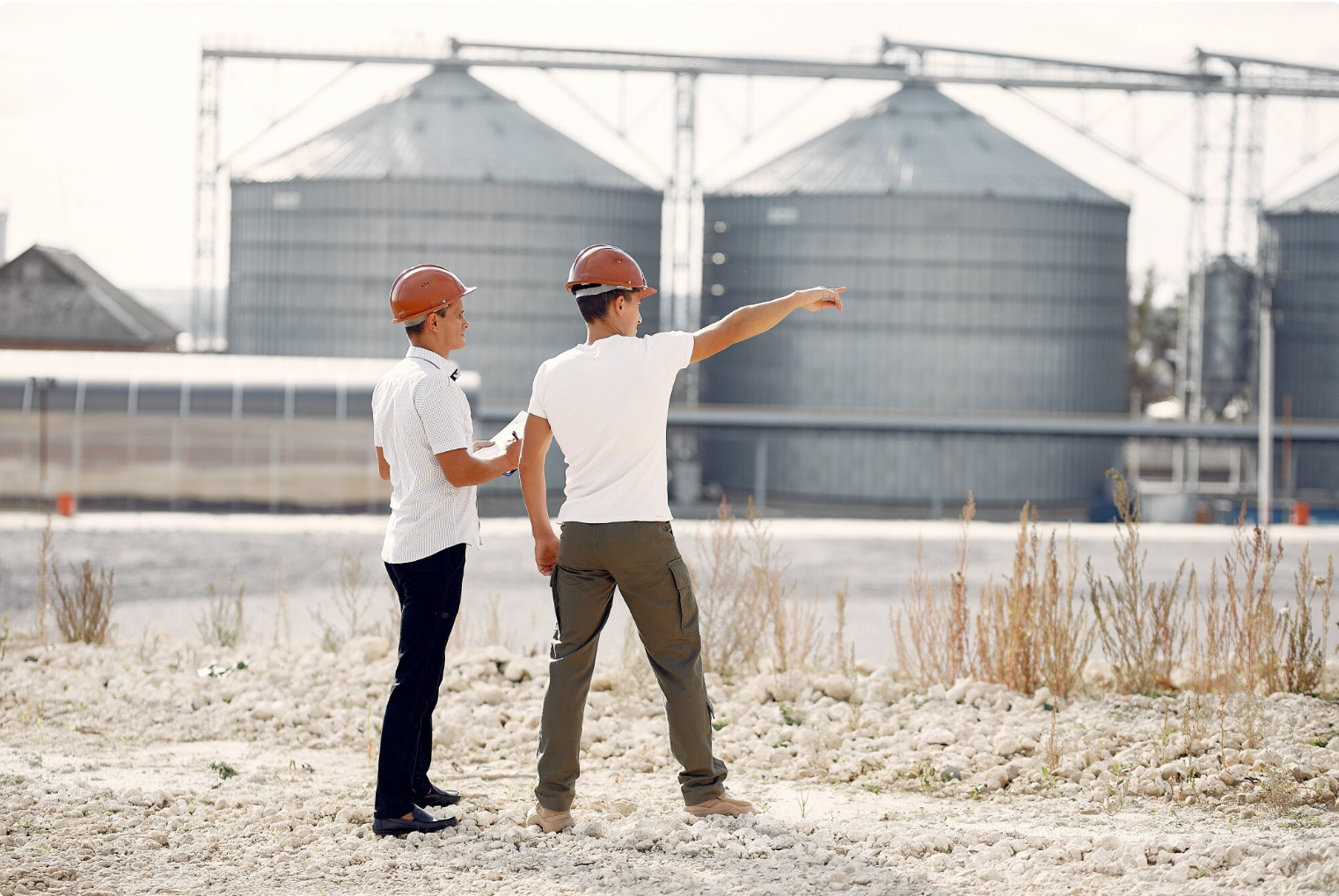
A silo is often the heart of a farm. But for the facility to function optimally, careful planning is required – not just of the silo itself, but of the entire system around it.
Step 1: Needs analysis
- How much grain needs to be stored?
- Is there a need for drying or just storage?
- What transports are used to and from the farm?
Step 2: Dimensioning
- Number of silos and capacity.
- Height and diameter based on the farm's production.
- Possibility for future expansion.
Step 3: Logistics and placement
- Place silos near drying facility and transport routes.
- Plan loading and unloading areas for smooth flow.
- Ensure accessibility for large trucks.
Step 4: Equipment and technology
- Ventilation and moisture control.
- Digital monitoring with sensors.
- Automation of conveyors and elevators.
Step 5: Safety and work environment
- Fall protection, ladders and walkways.
- Explosion hatches and dust filters.
- Routines for maintenance and inspection.
Summary
A well-planned silo facility provides higher efficiency, a better work environment and future-proof operation. Spend time on planning – it pays off in the long run.